
- Introduction
-
Technology, Knowledge, Worldviews
- Early Modern Authority
- Feedback Patterns in 19th-Century Ideologies
- The Railroad & Photography
- Competition in the Development of R&D
- Op-Ed: The Internet and Information
- Op-Ed: Photography, Editing, and the Destabilization of Truth
- Op-Ed: The Effects of Technological Immersion
- Op-Ed: Artificial Intelligence Is a New Kind of Technological Beast
- Technology, Empire, War
-
Technology, Popular Culture, Gender
- Witchcraft in Early Modern Europe
- The Trial of Marion Gage
- Nando's
- Women and Magazines in the Nineteenth Century
- Cold War Propaganda and Television
- Reproductive Repression
- Op-Ed: The Theatre Experience in the Age of Streaming
- Op-Ed: Compulsory Sterilization in Women's Prisons
- Op-Ed: The Future of Meat
- Creating Lives
- The Toolbox of Invention
- A&SC Highlights
The Competition of War
World War I was a crucial driving force in the genesis of research and development practices. In addition to promoting innovation in guns, aviation, and communication, the World War I was the first time chemical weapons were used successfully. With its highly productive chemical industry, Germany led the way in this new type of warfare when, in April of 1915, they unleashed over 160 tons of chlorine gas at the Second Battle of Ypres. By the end of the war, all sides were using poison gas, provoking the transformation of previously commercially-oriented chemical industry, which primarily produced synthetic dyestuffs, to become mass producers of chemical weapons. For the synthetic dye companies, innovation that was once driven by competition to discover new colors for use in the textile industry became superseded by the drive to serve the competition of war. The German government also actively recruited the work of chemists, chemical manufactures, and chemical-research laboratories to develop synthetic materials to substitute natural ones in short supply due to blockades and the general attrition of war. One of their major innovations was their realization of artificial nitrogen fixation in 1915, which provided nitrogen for explosives and fertilizers despite the lack of natural nitrogen sources. In this way, the competition of war clearly prompted Germany to pull together science and technology to solve material problems.
This was true for the other fighting nations as well. For example, France made large advances in aviation and Great Britain invented, developed, and mass produced tanks. An article in The New York Times from April of 1918 remarked that, “it is probable we would have had to wait a generation or two, without the stimulus of war, for the development of the airplane into a safe and practical vehicle, or for a satisfactory method of utilizing the antiseptic properties of chlorine, or for a feasible process of fixing atmospheric nitrogen–to mention only a few outstanding advances in the fields, respectively, of physics, medicine, and chemistry.” In addition to the development of complex technologies, the U.S. and other industrialized warring nations used their military and diplomatic machinery to support corporations that produced “strategic materials”(Tucker, 263). Strategic materials denoted raw materials that necessary for military preparedness and whose supply had to be stable for the country to survive the war. It is worth noting that the primary technological innovations developed during World War I were synthetic chemicals and tanks, and that other technologies such as aircraft, torpedoes, submarines, and wireless communication devices were improvements on existing models. Nonetheless, World War I supported industrial science that addressed wartime needs and fostered increasingly close relations between industry and governments.
Lastly, Germany's success in the mobilization of its chemical industry spurred the American government to do the same, even in the aftermath of the war. Just before entering into World War I, President Woodrow Wilson established the Office of Alien Property Custodian (APC) to confiscate property in the U.S. that belonged to citizens of enemy nations and gave leadership of the office to A. Mitchell Palmer. One of Mitchell's primary targets was the chemical industry. Though Palmer was later criticized for the measures he took as head of the APC, the proposals he established for the Chemical Foundation advanced the research and development network of the American chemical industry. In Aims and Purposes of the Chemical foundation, incorporated: and the reasons for its organization, published shortly after the conclusion of World War I, Palmer laid out several objectives with the overall goals of propelling the American chemical industry to the advanced state of the German chemical industry, as well as directly tearing down the German chemical industry. For example, Palmer stated that the Chemical Foundation,
"proposes to bring about a closer union of the university and the factory. It has taken over all German Copyrights, and will thus free much scientific literature from the shackles of the German language"(63)
Palmer's claim demonstrated that the competition of war motivated the U.S. government to foster cooperation between academia and industry. As we shall see, this collaboration between the government, universities, and industry would be important during World War II. Furthermore, after World War II, the close tie between academia and industry became a general feature of modern research and development.

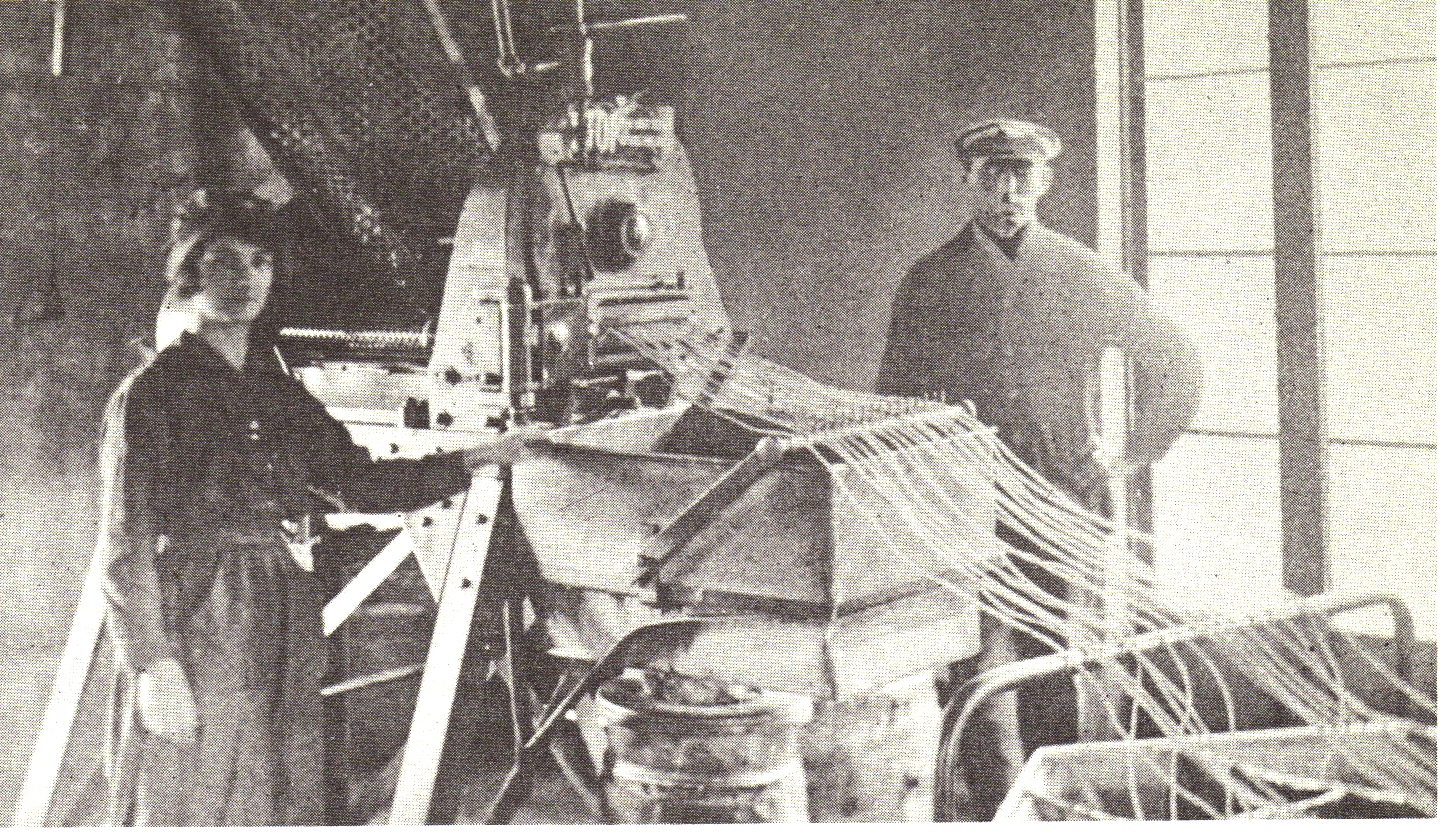
World War II brought about a new level of government engagement in technological systems. One instance of this occurred the rubber industry. In Insatiable Apatite: The United States and the Ecological Degradation of the Tropical World, Richard P. Tucker describes various transformations that occurred in the U.S. rubber industry over the course of the 19th and 20th century. In the first part of the 19th century, U.S. companies obtained rubber from natural sources, or cultivated rubber tree plantations, on foreign soil. However, in the 1930s, conflicts with Japan over Southeast Asia’s strategic materials as well as the once again looming war in Europe brought the diversification of rubber sources to the forefront of strategic concern of the U.S. government. In 1942, President Roosevelt established the Baruch Committee to oversee a research program and the use of federal funds to make synthetic rubber petroleum and coal. Supported by $700 million of government money, companies achieved full-scale production of synthetic rubber made from petroleum and coal within two years.
Nevertheless, the largest science project of World War II was that of the quest to build the atomic bomb. Aware that scientists in other countries, including and especially Germany, were working on the atomic problem, President Roosevelt agreed to back a bomb project in October of 1939 that would become known as the top-secret Manhattan Project. From there, the U.S. government gave its support and funding to a high-priority secret program orchestrated by a newly established government agency, the Office of Scientific Research and Development (OSRD). The first work on the project was carried out by physicists in several universities, leading to the successful development of a uranium reactor in 1942. At that point, the project was more of a big science effort than a full fledged industrial-factory enterprise. The construction phase June of 1942 when the bomb project was assigned to the Army Corps of Engineers under the leadership General Leslie Groves. Groves hired contractors and subcontractors from large firms such as Stone & Webster, Eastman Kodak, and Westinghouse, among others, and their chemists, physicists, and engineers worked out the theoretical components of the bomb technology and devised the method for uranium-235 production in secret nuclear facilities in Tennessee and Washington State. This portion of the project was achieved by the end of 1944, and the project then moved to Los Alamos, New Mexico. It was there that physicists assembled and tested the first atomic bomb in July of 1945. The Manhattan Project thus engaged the cooperation of university and industrial physicists, engineers, and chemists to invent and produce the atomic bomb. This project set the stage for other large, government-backed R&D projects that would continue after the World War II ended and throughout the modern era.
